
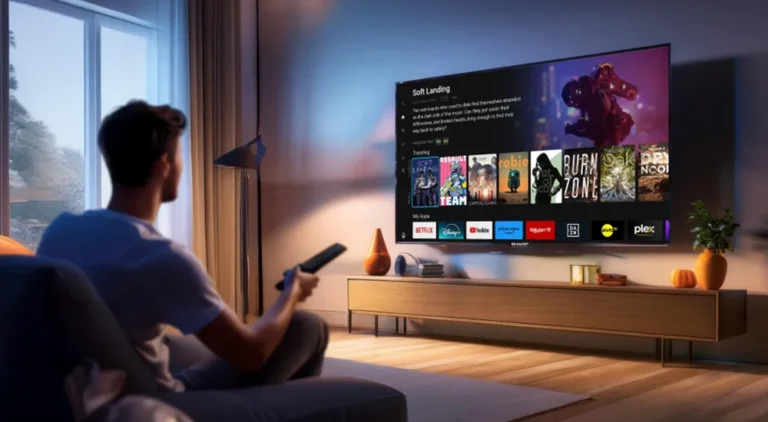
OTT Player: How to Configure on All Devices [Guide] 🚀
Getting your streaming to work perfectly can be tricky. Buffering, lag, and poor quality ruin the fun! 😫 This guide is your fast-track to a smooth experience. We’ll walk you through simple settings on any device to make your OTT player run like a dream. Let’s fix it together!
1. Why Does Buffering Happen? The Techy (But Simple) Story ⚙️
Think of your video stream like a water pipe. Buffering happens when the video data can’t reach your device fast enough. Your player has to stop and wait for more “water” to fill its cup. This is often due to:
- Slow Internet: Your connection is the pipe. If it’s too narrow, data trickles.
- Network Congestion: Too many devices are using the pipe at once.
- Server Distance: The water source (the streaming server) is far away.
- Weak Device: Your phone, TV, or box struggles to process the video quickly.
Our fast-track approach focuses on widening that pipe and clearing the path!
2. First Fix: Network Settings (DNS & MTU) 🌐
Let’s start with your network’s foundation. These are easy tweaks that can make a big difference.
✅ Change Your DNS Server
Your default DNS might be slow. Switching to a faster one (like Google DNS or Cloudflare) can speed up how your device finds the streaming server.
- Google DNS: 8.8.8.8 and 8.8.4.4
- Cloudflare DNS: 1.1.1.1 and 1.0.0.1
You can change this in your device’s Wi-Fi/Ethernet settings or, better yet, in your router’s admin panel for all devices at once.
🔧 Check Your MTU Size
MTU is the maximum size of a data packet. If it’s set wrong, data gets broken up and slows down. For most home networks, 1500 is standard. If you use a VPN, try lowering it to 1450 or 1400. You change this in your router settings.
3. Hardware Acceleration: On or Off? 💻
This setting lets your device’s graphics chip (GPU) help with video decoding. It’s usually a button in your player’s settings.
- Your device is modern (from the last 5 years).
- You watch high-quality 4K or HDR streams.
- Your main device (CPU) feels hot or slow.
- You see green screens, crashes, or weird colors.
- You have a very old device or TV box.
- Turning it on makes things worse. Just test it!
For the best IPTV experience on a computer, a player with good hardware support is key.
4. Picking the Best Player & Format 🎬
Not all video formats are equal. Some are easier for your device to play. In your OTT player settings, look for a “Decoder” or “Output” option.
- H.264: The most compatible. Use this if you have issues.
- H.265 (HEVC): Better quality at smaller sizes, but needs a newer device.
- AV1: The newest, most efficient, but support is still growing.
If your stream stutters, try switching the decoder from “Hardware” to “Software” or vice-versa. Also, using a dedicated player app on your device often works better than a web browser.
5. Clear the Cache: Give Your Player a Fresh Start 🧹
Over time, your app stores temporary data (cache). If it gets too full or corrupted, it causes problems.
How to clear cache: Go to your device’s Settings > Apps > Find your OTT Player > Storage > Clear Cache. Do NOT press “Clear Data” unless you want to log in again.
Do this every few weeks to keep things running smoothly. It’s like cleaning the dust out of a fan.
6. Using a VPN to Stop Internet Throttling 🛡️
Sometimes your Internet Provider might slow down streaming traffic (this is called throttling). A good VPN can hide your streaming activity, potentially stopping this slowdown.
Tip: Choose a VPN known for speed and with servers close to you. Connect to a server in your own country or a nearby one for the best performance.
Remember, a VPN adds a step, so your speed might be slightly lower. It’s a trade-off for privacy and bypassing blocks.
7. Router Tweaks for Perfect Streaming 📶
Your router is the boss of your home network. Log into its admin page (usually 192.168.1.1 in a browser) and check these:
- Quality of Service (QoS): Set your streaming device or OTT player app as “High Priority.” This tells your router to give it bandwidth first.
- Channel Selection (Wi-Fi): Use a tool on your phone to find the least crowded Wi-Fi channel and set your router to use it.
- Firmware Update: Make sure your router’s software is up-to-date for the best performance and security.
If possible, connect your main streaming device (like a TV box) with an Ethernet cable. It’s always faster and more stable than Wi-Fi.
8. Pro Tips for Families & Multiple Streams 👨👩👧👦
When several people are streaming at once, these tips are golden:
- Upgrade Your Internet Plan: For multiple HD/4K streams, a plan with at least 100 Mbps download speed is recommended.
- Use a Mesh Wi-Fi System: This eliminates dead zones and gives strong signal everywhere in the house.
- Schedule Big Downloads: Don’t let a game or movie update hog bandwidth during prime-time viewing.
- Separate Networks: Some routers let you create a separate “Guest” network. Put other devices on there to free up bandwidth for your main streaming devices.
Following this fast-track guide will solve most common streaming issues. Start with one change, test it, and move to the next. Your perfect, buffer-free movie night is just a few settings away! 🎉
Ready for the Ultimate Streaming Experience? 🚀
Pair these optimization tips with a powerful, reliable player designed for modern streaming. Get seamless access to live TV, movies, and series.